



Psilocybin and the hypnagogic lamp represent two powerful gateways into altered states of consciousness. One works through chemistry on serotonin receptors, the other through rhythmic light stimulation. When they meet, or when used in a complementary way, they open fascinating possibilities for deep relaxation, inner exploration, and therapeutic integration. At retraite-eveil.com, we explore these tools with respect and rigor, because they can support each other within a holistic approach to the psychedelic journey.
In this article, we will look at what a hypnagogic lamp is, how it works, how it differs from and complements psilocybin, and how these two approaches can create meaningful synergies for those seeking to expand their consciousness in a safe and intentional way.
What is a hypnagogic lamp?
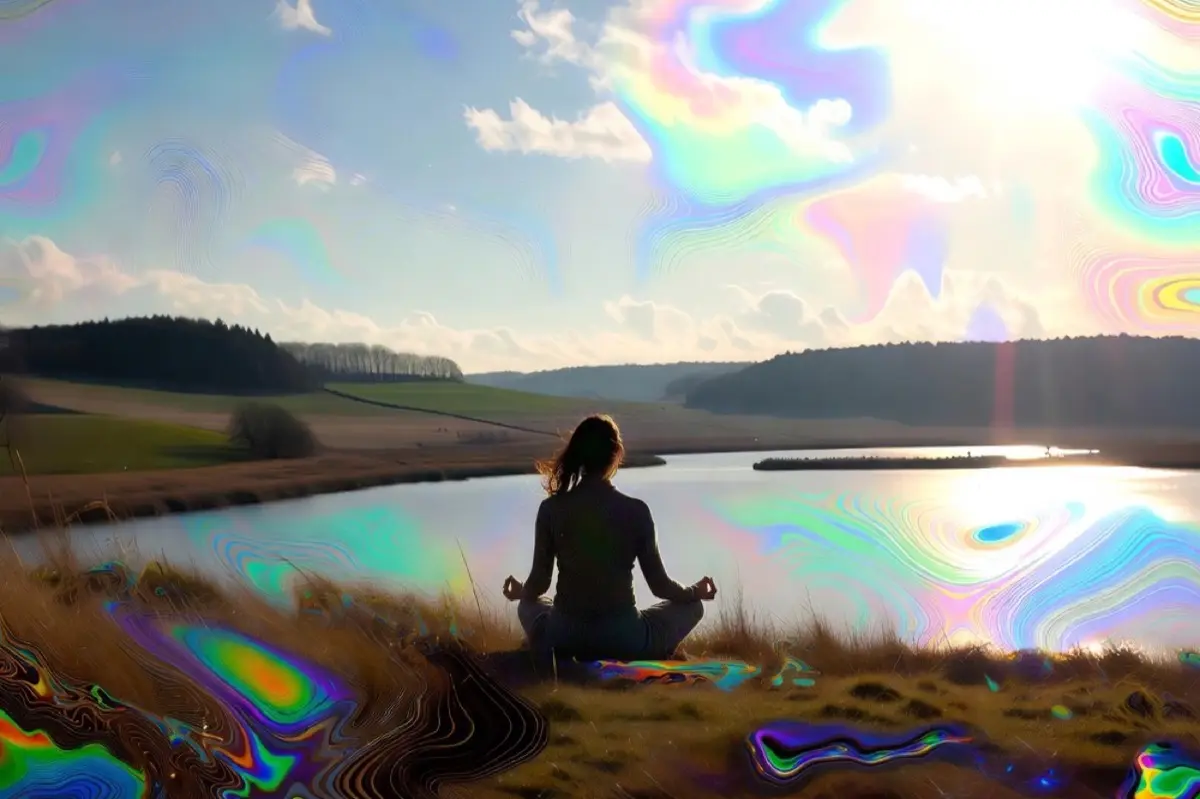
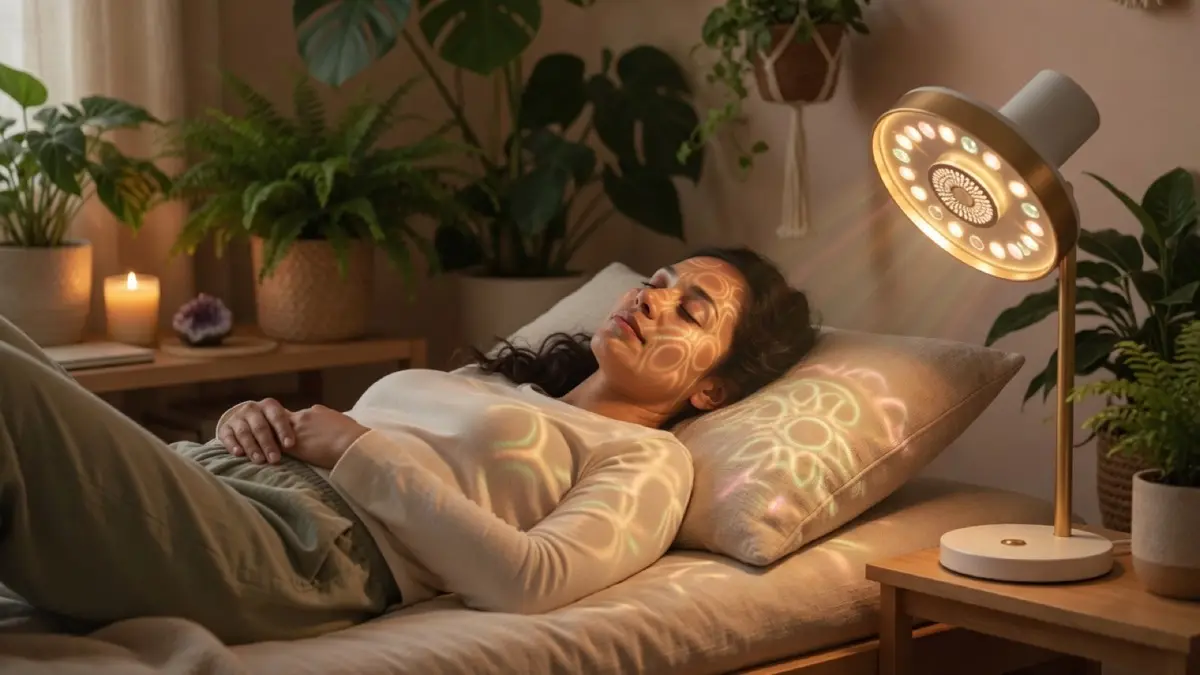
A hypnagogic lamp, also known as a photostimulation lamp or stroboscopic light machine (models such as Lucia N°03, Roxiva, Inner Light or Enkidu), is a device that emits flashes of white light at precise frequencies, usually between 3 and 30 Hz. The person keeps their eyes closed: the light passes through the eyelids and directly stimulates the visual cortex. This rhythmic flickering triggers a phenomenon called “photic driving” or photic entrainment: the brain gradually synchronizes its electrical activity to the rhythm of the light. This leads to an increase in alpha and theta waves, which are characteristic of deep relaxation, meditation, and the hypnagogic phase (the transition between wakefulness and sleep). Participants often report colorful geometric patterns, mandalas, kaleidoscopic visions or sensations of inner travel, without any substance. This is why some lamps are sometimes described as enabling a “psychedelic experience without drugs”.How does photic stimulation work?
The mechanism is based on brainwave entrainment. When light flickers at a given frequency, the brain tends to “lock onto” that rhythm (photic driving). At 8-12 Hz, alpha waves are favored (relaxed wakefulness). At 4-8 Hz, the brain enters the theta range, associated with creativity, vivid mental imagery and hypnagogic states. More advanced devices often combine light with binaural or isochronic sounds, creating an even more immersive multisensory experience. A session usually lasts between 20 and 60 minutes, lying down in a calm and safe environment. Testimonials and user feedback highlight rapid relaxation, reduced stress, improved sleep quality and access to unconscious material, sometimes comparable to certain aspects of psychedelic journeys. Learn more about Roxiva hypnagogic light experiences and their psychedelic-like effectsPsilocybin: a serotonergic journey
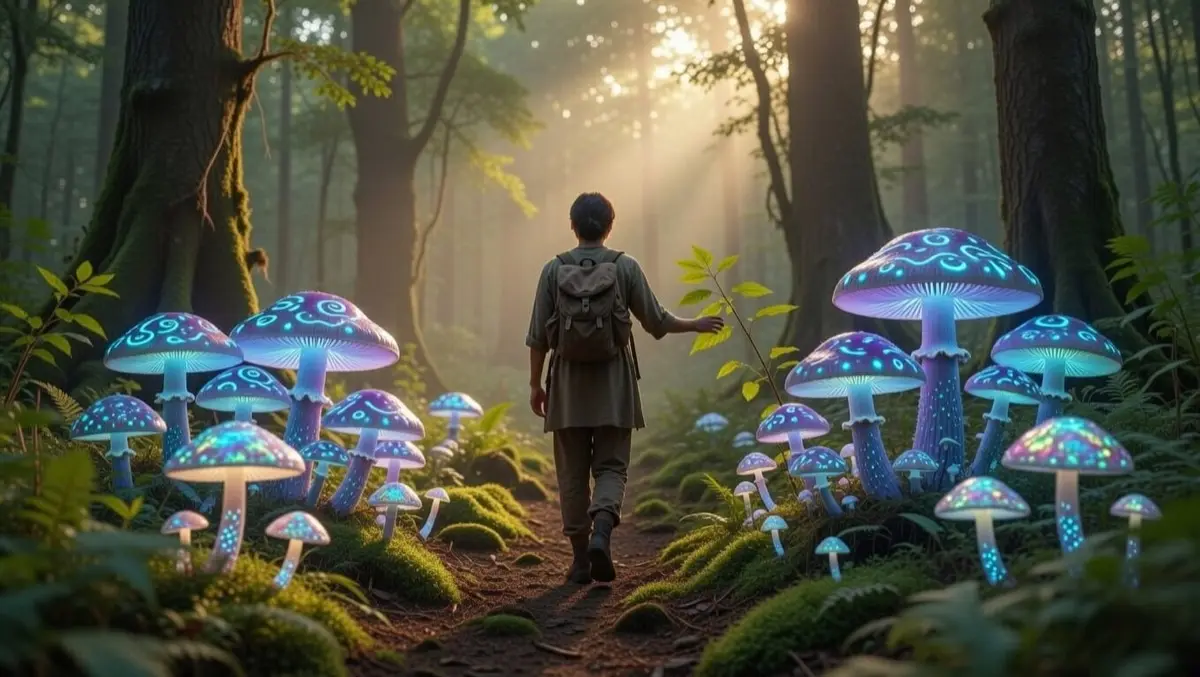
Psilocybin (and its active form, psilocin) acts primarily as an agonist of the 5-HT2A serotonin receptors. It increases brain entropy, temporarily deactivates the Default Mode Network and promotes greater connectivity between different brain regions. The result is a dissolution of usual self-boundaries, intense visuals (even with eyes closed), heightened emotions and often a profound sense of unity or meaning. Studies have shown that psilocybin also alters sleep architecture and cortical oscillations, with a notable increase in slow waves and changes in gamma-band activity. Study on the effects of psilocin on sleep and brain oscillationsSynergies between psilocybin and the hypnagogic lamp
The two approaches share fascinating commonalities while being radically different in their mode of action. Psilocybin works “from the inside” through brain chemistry, while the hypnagogic lamp works “from the outside” through the visual system and rhythmic brainwave entrainment. Recent research suggests that psilocybin and light exposure can produce similar effects on the brain, particularly in modulating states of consciousness and sensory information processing. Research on similar brain effects between psilocybin and light exposure In practice, several synergies emerge:Preparation and entry
Using the hypnagogic lamp before a psilocybin session can help calm the nervous system, enter a theta state conducive to the journey and reduce come-up anxiety.Amplification of visuals
During the experience, the lamp can intensify or guide geometric patterns, offering a kind of “visual GPS” that makes the journey smoother and less overwhelming for some people.Integration and safe revisiting
After a retreat, the lamp allows one to revisit states close to the psychedelic experience without substances, which facilitates integration and anchoring of insights.Sober alternative or complement
For those who cannot or do not wish to consume psilocybin, the lamp provides a powerful gateway to expanded states of consciousness. Testimonials collected in wellness and holistic therapy contexts report that combining or alternating the two tools can deepen relaxation, enrich mental imagery and foster a sense of safety during the more intense phases of the journey. Connection between hypnagogia and psychedelic experiencesUse in retreats and psychedelic support
In certain specialized centers and retreats, including those that integrate innovative approaches such as Retraite Eveil, the hypnagogic lamp is part of the environment or tools offered. It helps create a “sensory cocoon” that supports participants before, during or after taking psilocybin (or magic truffles). It is particularly appreciated for:- Encouraging gentle, restorative sleep after the session
- Offering a space for “sober journeying” between ceremonies
- Helping anxious individuals gradually become familiar with altered states of consciousness in a progressive and controlled way