



Autumn meadows and wood chip beds tempt visitors to pick wild psilocybin mushrooms after reading species lists online. The activity combines botanical difficulty, criminal risk, and occasional fatal poisoning when toxic lookalikes win. This article explains what trained mycologists examine before assigning a Latin name, why smartphone photos fail, and how legal truffle retail offers a different risk profile than foraging.
Compare regulated products in our magic mushrooms versus magic truffles guide. Toxic mimics and amatoxin chemistry are detailed in lookalike mushrooms and poisoning risk.
Why wild identification is expert work
Psilocybe species share visual traits with dozens of brown gilled mushrooms. Color, cap shape, and habitat overlap across genera. Reliable keys demand spore prints, microscopic spore dimensions, cystidia shapes, and sometimes DNA barcoding. Field guides written for Scandinavia or the Pacific Northwest do not automatically apply to Dutch park mulch.
Citizen observations on iNaturalist help ecology mapping but community IDs are often wrong. Never consume based on app consensus.
Features mycologists document in the field
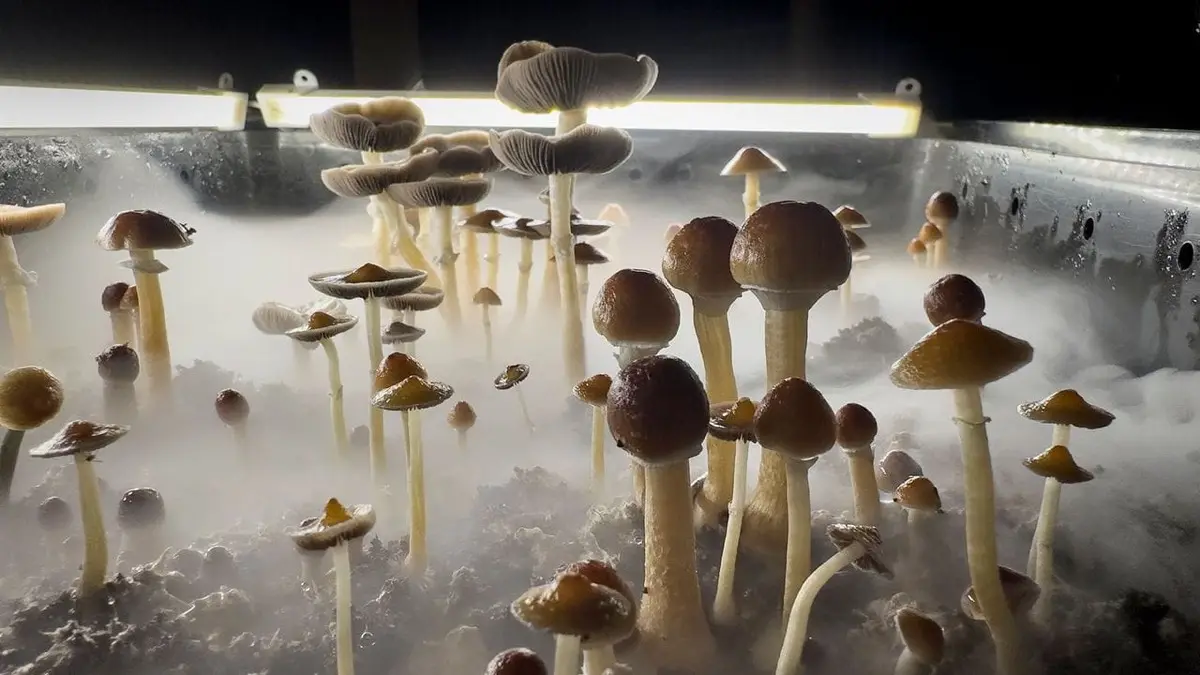
Collectors note substrate, smell, bruising reaction, gill attachment, ring presence, and spore print color on white and black paper. Liberty caps show purple brown spore dust and translucent striate caps when moist. Wood lovers such as cyanescens display wavy caps and often grow in clusters on decaying lignin.
Each trait overlaps partially with deadly species. Galerina and Conocybe lineages also produce brown spores and grow on wood chips. One misread trait cascades into hospitalization.
Legal context in the Netherlands and EU
Fresh psilocybin mushrooms are prohibited products under Dutch policy summarized by the EMCDDA. Picking liberty caps on public land can trigger possession charges even when quantities are small. Tourists sometimes assume decriminalization of retail truffles extends to meadow foraging; it does not.
Licensed retreats source sealed sclerotia with vendor paperwork. That channel exists precisely because wild picking is neither legal nor quality controlled for group settings.
Why bruising blue is insufficient
Oxidation bluing occurs in multiple genera and intensifies with age in some non psychoactive species. Conversely, old dried Psilocybe may blue weakly. Bruising is a screening hint, not a safety certificate. Taxonomic authority remains with structured keys and voucher specimens logged on MycoBank.
Social media posts highlighting only blue stems omit spore evidence and therefore mislead beginners.
Poisoning outcomes when identification fails
Amatoxin containing mushrooms cause delayed liver failure. Symptoms may ease before catastrophic decline, convincing victims they recovered. Case literature indexed under mushroom toxin prevalence studies documents deaths after misidentified small brown mushrooms mixed into psilocybin hunts.
Contact poison control immediately if anyone ingests an unidentified wild mushroom. Bring remaining specimens for hospital mycologists.
Retreat guests and the sclerotium alternative
Structured programs weigh fresh truffles on site, store them cold, and screen medical history. None of that replaces mycology skill because facilitators rely on supply chain traceability instead of forest taxonomy. Guests who understand the difference stop romanticizing cap picking.
Our mushroom versus truffle comparison clarifies moisture, dosing, and legal framing without encouraging either illegal mushrooms or reckless foraging.
Education resources without harvesting encouragement
Universities and mycological societies run identification courses using archived specimens. Microscopes reveal spore shape faster than guesswork. The NIH psilocybin summary emphasizes medical supervision and known substance identity, criteria wild caps rarely satisfy.
Learning taxonomy to read science news is admirable. Learning taxonomy to dose yourself in a cow field is a category error.
Regional variation across Europe
Semilanceata dominates northwestern Europe while cyanescens spreads on urban mulch. Southern Europe hosts different Psilocybe species with distinct keys. A technique learned in one country may fail across a border. Climate change shifts fruiting calendars, invalidating decade old forum posts about exact weeks to search.
Stick to documented keys for your region or abstain. Half knowledge is the dangerous middle.
Local mycology societies and guided walks
Dutch and Belgian mycological clubs organize autumn excursions that teach toxic species beside liberty caps under magnification. Participants learn spore prints without harvesting psychoactive material. That format builds skill faster than solo guessing in a field after reading one blog post.
Guided walks also clarify which parks prohibit picking entirely, a rule unrelated to whether a mushroom contains psilocybin.
Limits of identification apps
Machine learning trained on curated photos struggles with young buttons, dew soaked caps, and partial specimens. Apps may return confident wrong genus names that feel authoritative because the interface is polished. Never swallow based on a phone suggestion.
Hospital mycologists still need physical material. Digital guesses do not accelerate antidote decisions.
Alcohol, cannabis, and foraging weekends
Festival camping that mixes alcohol, cannabis, and improvised mushroom hunts compounds identification errors with impaired judgment. Retreat rules that limit substance mixing exist partly because facilitators cannot reconstruct what guests ate in the forest the night before.
Disclose any wild ingestion honestly during medical screening even when embarrassment feels high.
National parks and protected habitats
Protected areas prohibit picking regardless of species identity. Rangers enforce habitat rules separately from Opiumwet commerce categories.
Ecological harm from trampling extends beyond personal legal risk for tourists camping near foraging hotspots.
Spore print technique for learners
Placing a cap gill side down on white and black paper overnight deposits spore dust whose color is a primary key trait. Purple brown prints suggest certain Psilocybe lineages; rusty brown prints demand caution because Galerina shares wood chip habitats. Learners practice on supermarket mushrooms before touching wild collections.
Spore prints take hours and cannot be rushed on a damp morning before checkout flight. That time requirement alone disqualifies impulsive tourist foraging.
Documenting habitat context
Mycologists photograph substrate, neighboring plants, and GPS coordinates with privacy awareness. Cow pasture semilanceata differ ecologically from mulch cyanescens even when both bruise blue. Habitat notes narrow possibilities before microscopy yet still fail to justify ingestion without expert sign off.
Retreat educators use habitat photos from archives to teach recognition without sending guests into fields.
Winter versus autumn fruiting calendars
Liberty caps peak in cool wet months while wood chip species respond to mulch refresh cycles in parks. Tourists who visit Amsterdam in summer miss semilanceata season yet may still encounter cyanescens flushes after landscaping projects. Calendar mismatch drives purchases of dried mystery caps from strangers, a higher risk channel than refrigerated truffles.
Check regional phenology charts from mycological societies rather than decade old forum pins.
Voucher specimens and legal evidence
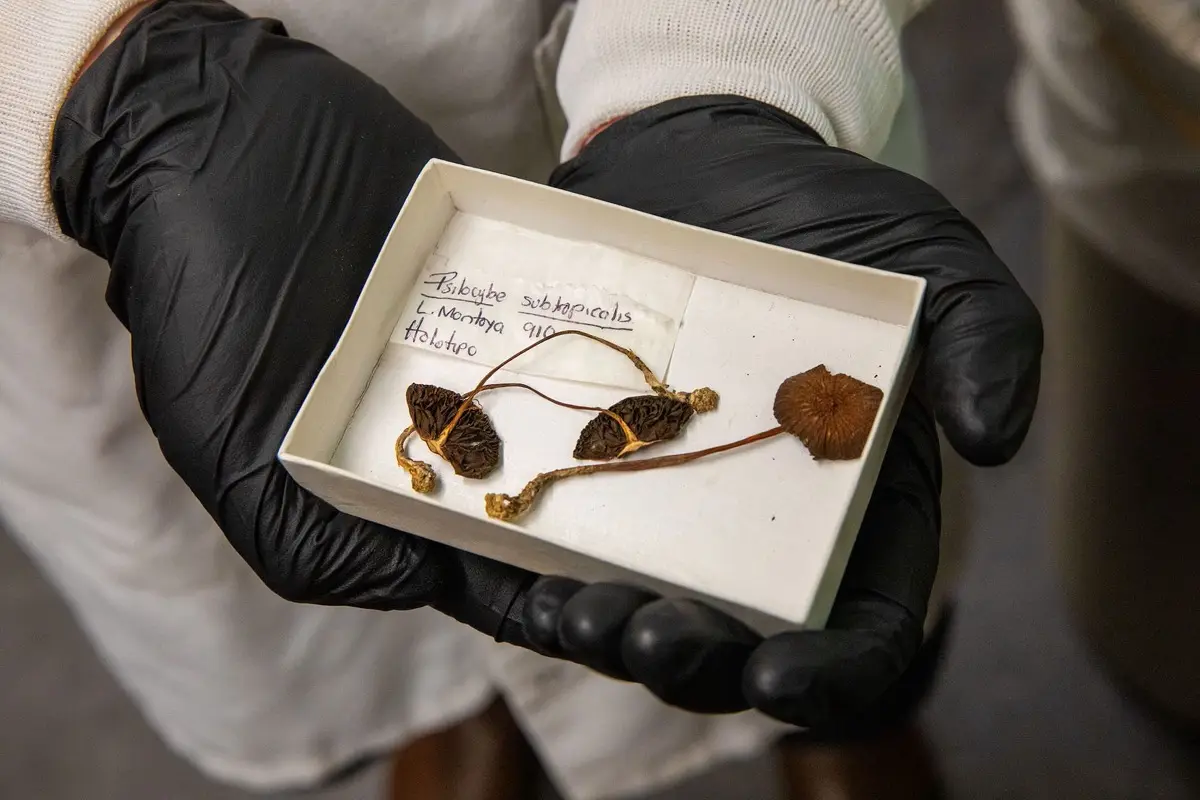
Hospital mycologists document poisonings with dried voucher specimens deposited in regional herbaria. Tourist foragers rarely collect vouchers properly, which slows toxin identification after mixed basket mistakes.
Herbarium vouchers after poisoning
Regional herbaria archive dried specimens that hospital mycologists use to confirm amatoxin cases. Tourist baskets rarely include proper vouchers, which delays toxin identification when multiple small brown species were mixed.
Why retreat intake asks about foraging plans
Licensed programs increasingly ask whether guests intend to forage after sessions because stimulated curiosity raises poisoning risk on autumn weekends. Honest answers help facilitators reinforce identification limits without encouraging woodland collection.
Conclusion
Wild psilocybin mushroom identification demands multi trait analysis, legal awareness, and respect for lethal lookalikes. Retail truffles exist partly to bypass that hazard in supervised contexts. Study poisonous mimics, read product comparisons, and leave foraging to credentialed mycologists unless you accept prosecution and medical risk.
UNLOCK THE MIND. ELEVATE THE SELF.