



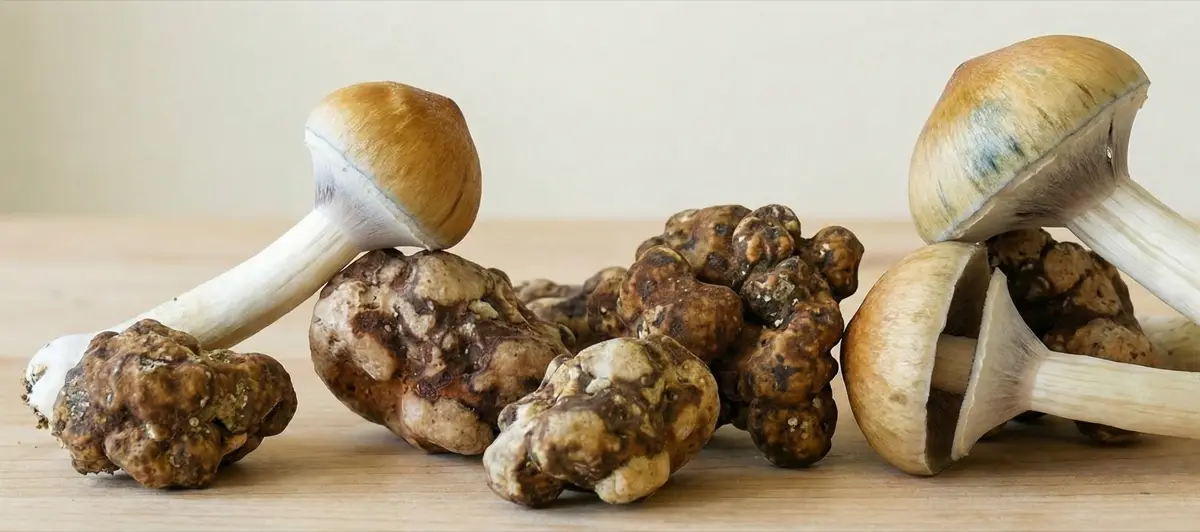

Licensed Dutch growers supply most of the psilocybin sclerotia sold legally in Europe. Their workflow looks more like controlled food fermentation than a kitchen grow kit: sterile grain, incubation halls, batch paperwork, and refrigerated trucks. This article walks through how facilities steer Psilocybe mycelium toward truffle formation, what happens before retail packaging, and how cultivation sits inside national drug law. The goal is literacy for retreat guests and educators, not instructions to replicate production at home.
Product context lives in our magic truffles overview and statutory background in Netherlands truffle legislation. For humidity, CO2, and substrate chemistry in depth, continue with environmental conditions for sclerotia formation.
Culture banks and sterile propagation
Production begins with verified isolates matched to published species descriptions on MycoBank. Lab techs grow clean mycelium on agar, then transfer wedges into sterilized rye or millet. HEPA filtered air and laminar flow hoods matter because bacterial contamination outraces psilocybin fungi within days.
Each jar logs incubation date, temperature, and colonization percentage. Green mold, sour aroma, or stalled growth mean discard, not rescue. That QC culture explains why sealed shop truffles rarely show the mold loads common in hobby photos online.
Scaling colonized grain into production bags
Master grain inoculates larger substrate bags weighing several kilograms. Recipes stay proprietary, but generally combine grain, water, and mineral supplements that keep pH stable. Bags breathe through filter patches that block microbes yet allow gas exchange at a controlled rate.
Colonization runs two to four weeks before managers shift parameters toward sclerotium mode. Facilities track separate schedules for Mexicana, Tampanensis, and branded lines because growth speed and truffle size curves differ.
Stress signals that trigger sclerotia
Sclerotia appear when mycelium stores nutrients under conditions that discourage mushroom pinning: high humidity, elevated CO2, stable warmth, and extended incubation without fresh air bursts. The biology parallels survival structures studied in plant pathogenic fungi at Wageningen University and Research, even though psychedelic crops occupy a tiny research niche.
Fruiting rooms use light cycles and oxygen spikes; truffle rooms stay dim and stuffy. Switching modes too early yields thin harvests; waiting too long invites contamination. Experienced growers read bag weight loss and mycelium color rather than calendars alone.
Harvest, trim, and grade
Workers break open substrate bags, separate sclerotia from grain, brush off debris, and sort by size grade. Premium grades look uniform in smart shop displays. Seconds may feed wholesale channels. Anything slimy, ammonia scented, or insect damaged is rejected.
Some lines get a quick rinse with food grade water; others dry surface moisture on racks before packing. General hygiene follows public health principles referenced by RIVM, adapted to a product that is neither fresh vegetable nor shelf stable supplement.
Cold chain and batch traceability
Vacuum pouches with micro perforations balance gas exchange and spoilage control. Labels list strain trade name, fresh gram weight, pack date, and producer contact. Batch codes tie back to incubation logs if potency or contamination questions surface later.
Summer exports within Europe ride in insulated shippers. Retailers who respect cold storage extend safe windows; shops that leave boxes at room temperature shorten them. Traceability does not replace conservative dosing, yet it beats anonymous dried caps of unknown origin.
Law, permits, and market structure
The EMCDDA panorama series and Netherlands country drug profile document that psilocybin containing sclerotia remain tolerated for retail while fresh psilocybin mushrooms stay prohibited. The Dutch government drugs topic page summarizes how Opiumwet schedules interact with shop licensing.
Political debate can change retail rules faster than mycology textbooks update. Compliance teams inside growers read ministerial guidance tourists never see. Understanding that frame prevents mistaking today shelf assortment for a permanent global norm.
Potency variability despite control
Indoor agriculture narrows alkaloid spread compared with wild foraging, yet batch variation persists. Reviews indexed via Psilocybe chemistry literature show genetics, harvest timing, and moisture all shift psilocybin and psilocin ratios. Facilities rarely publish full lab certificates on every SKU, so marketing adjectives outrun numbers.
Clinical programs prefer synthetic psilocybin partly for that predictability. Retreat guests eating whole sclerotia should expect wider onset and duration windows than hospital infusions.
Waste handling and environmental compliance
Spent substrate bags contain colonized grain and sclerotium fragments that could sprout if dumped in gardens. Professional facilities contract biowaste haulers or compost under permits that prevent accidental outdoor establishment. Hobby copycats who discard bags in city parks risk introducing non native fungi into urban ecology.
Water used to rinse truffles passes through grease traps and municipal treatment like other food businesses. Environmental inspectors care about effluent pH and biomass load even when psychoactive alkaloids are not their primary metric.
Relationship between growers and smart shops
Retailers rarely own incubation halls. Wholesalers batch test, brand, and distribute to Amsterdam smart shops and online mail order hubs. Margin splits explain why identical species names sometimes diverge in freshness: different warehouse rotation speeds, not different Latin binomials.
Seasonal demand spikes around tourism calendars push facilities to harvest slightly early or hold bags longer. Those operational choices influence texture and alkaloid stability as much as strain posters suggest.
Questions retreats can ask vendors
Professional facilitators confirm cold receipt, inspect seal integrity, and archive label photos before sessions. They ask whether transport stayed inside stated temperature bands. Programs that skip those checks inherit supplier mistakes.
Knowing cultivation basics helps interpret ultra strong strain billboards. Incubation stress and genetics set the ceiling; adjectives do not.
Quality audits and third party testing
Some wholesalers send random bags to external laboratories for moisture and microbial colony counts. Psilocybin assays remain optional because alkaloid testing is expensive and not mandated for current retail categories. Buyers should not assume every pouch has HPLC data behind it.
When retreats advertise laboratory tested products, ask which parameters were measured. Microbial safety matters as much as alkaloid bragging when tissue is eaten raw or steeped in tea.
Energy and sustainability footprint
Climate controlled rooms run continuously year round. Dutch producers face rising electricity costs like other indoor agriculture. Sustainability reports are rare, yet energy intensity is part of the true cost tourists rarely see on price tags.
Comparing local sealed truffles with intercontinental dried mushroom shipments involves carbon math beyond this article, yet cultivation locality remains one reason Netherlands retail consolidated here.
Export logistics within the EU
Wholesalers ship refrigerated pallets to Germany, Belgium, and France under commercial food transport rules that ignore psychoactive politics until customs elsewhere intervene. Temperature loggers in pallets document chain integrity for liability reasons, not guest comfort.
Retail mail order from Dutch websites into neighboring countries occupies a gray zone travelers should not confuse with personal import permission.
Staff training and contamination response
Production facilities train harvest crews to recognize early trichoderma outbreaks and bacterial slime before truffles reach sorting tables. Response protocols isolate affected bags, log batch numbers, and notify wholesalers within hours. That internal discipline rarely reaches tourists yet explains why licensed supply chains outperform hobby kits in consistency.
Guests who understand QC culture interpret occasional out of stock strain lines as safety decisions rather than conspiracy.
Conclusion
Netherlands truffle production couples industrial mycology with a singular legal category. Sterile culture, deliberate stress, graded harvest, and refrigeration deliver the products used in licensed retreats. Pair product background with legislation context, then read environmental formation science when you want the grow room variables spelled out in finer detail.
UNLOCK THE MIND. ELEVATE THE SELF.