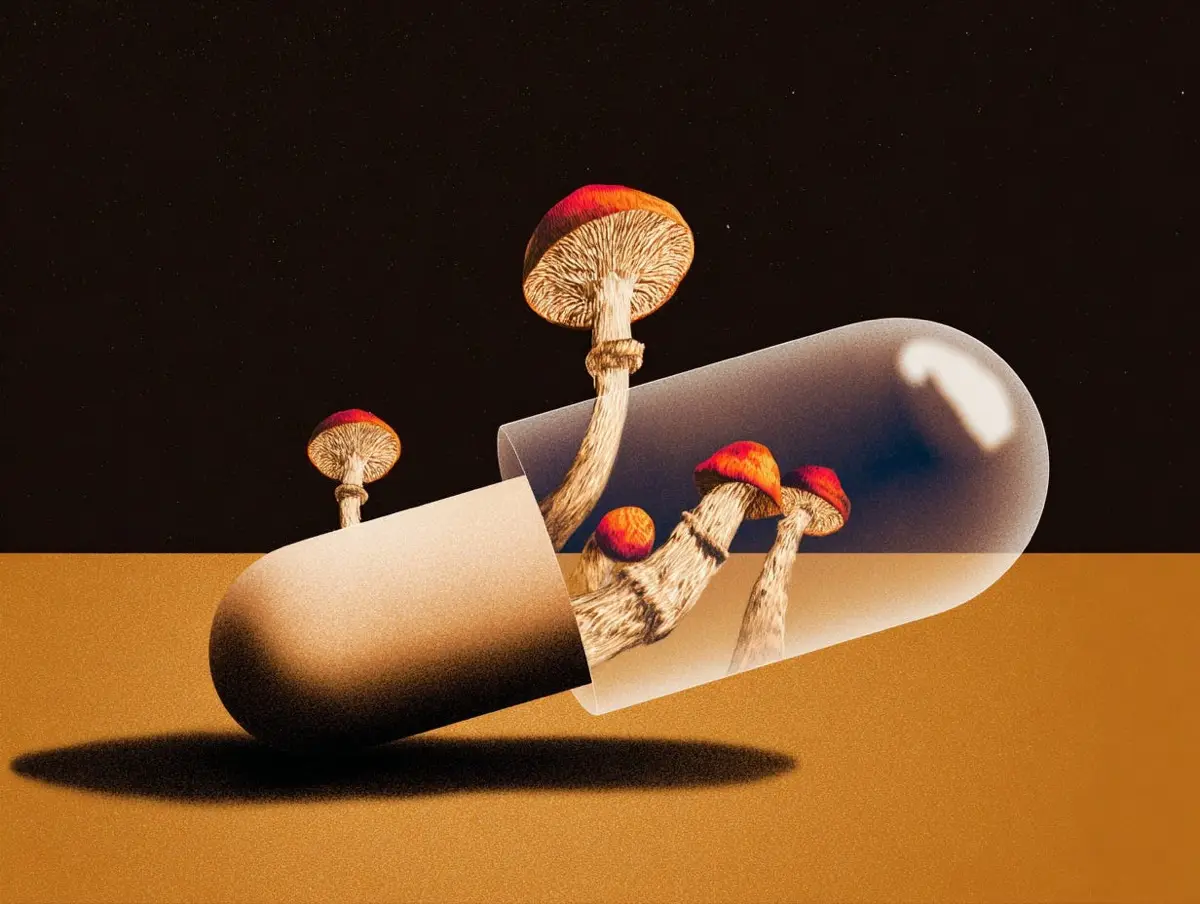





Why blinding psilocybin is inherently difficult
Classic double-blind trials assume participants and staff cannot reliably guess treatment assignment. Psilocybin at therapeutic doses produces unmistakable perceptual, emotional, and somatic changes, which collapses blind integrity within hours. Sponsors therefore use active placebos such as niacin, which causes flushing and warmth, or sub-perceptual psilocybin doses, with mixed success at preserving guess rates near chance (PubMed: Muthukumaraswamy et al., 2021).
Partial unblinding does not automatically invalidate trials, but it complicates attribution. When most participants and therapists correctly identify the drug arm, apparent superiority may reflect expectancy, therapeutic alliance, and ritualized care as much as pharmacology. Readers should cross-read our overview of psychedelic-assisted therapy versus retreats and adverse event reporting when weighing headline effect sizes.
Expectancy, suggestion, and regression to the mean
Expectancy theory predicts symptom change when individuals believe they received an active treatment. Psychedelic protocols amplify suggestion through preparation language, music curation, therapist attention, and cultural narratives about transformation. Short-term depression trials also contend with spontaneous remission and regression to the mean, especially when enrollment occurs during acute distress.
Statisticians apply sensitivity analyses that adjust for guessed assignment or exclude participants who unblind early. Results sometimes shrink but remain significant; other times effects attenuate toward null. Transparent publication of guess questionnaires and therapist allegiance measures remains uneven across sponsors, limiting meta-analytic correction.
Placebo psychotherapy and matched contact time
Some designs deliver inert capsules alongside psychotherapy hours matched to the drug arm. When both groups improve substantially, psychotherapy alone may explain part of the benefit. That finding is clinically meaningful because human support matters, yet regulators still require evidence that the investigational drug adds value beyond contact time alone.
Matching hours is expensive and logistically demanding, which is why many phase 2 trials used low-dose psilocybin rather than pure placebo as comparator. Interpreting those trials requires asking whether the low dose itself produced partial psychedelic effects that blurred comparison.
Active comparators and delayed-start designs
Trials comparing psilocybin with six weeks of established psychotherapy raise ethical appeal when withholding promising treatment feels problematic. They also increase external validity for clinicians who wonder whether drug-specific effects exceed good therapy. Delayed-start and randomized withdrawal designs attempt to separate acute drug effects from sustained psychotherapy gains.
Each design embeds trade-offs. Active comparators may underestimate drug effects if the comparator is unusually strong. Delayed-start models may overestimate effects if early improvement reflects non-specific trial participation. Preregistration of primary endpoints becomes essential to prevent post hoc storytelling.
Therapeutic alliance as a non-blindable ingredient
Alliance between therapist and participant predicts outcomes across psychiatric treatments. Psychedelic manuals emphasize trust before inviting disclosure of vulnerable material. Alliance is difficult to blind yet ethically mandatory. Attempts to minimize therapist expectancy through standardized scripts only partially succeed because skilled clinicians respond dynamically to patient states.
Some researchers model alliance scores as covariates in secondary analyses. Others argue alliance is part of the treatment package rather than a confound to eliminate. Regulatory frameworks increasingly treat psilocybin plus manualized therapy as a combined intervention, which reframes but does not remove expectancy questions.
Oncology and end-of-life trials face the same limits
Cancer-related anxiety studies described in our end-of-life ethics article also suffer unblinding. Crossover designs ethically allow all participants to eventually receive psilocybin, yet they limit long-term blinded comparison. Open-label extensions generate rich qualitative data while weakening causal inference about duration of benefit.
Patient selection criteria discussed in exclusion protocols further shape who enters these trials, which influences baseline expectancy and prior psychedelic exposure that can alter blind integrity.
Retreat settings maximize expectancy confounds
Retreat guests know they will ingest magic truffles or similar products. Suggestion is therefore maximal, as explored in why retreats are not therapy. Self-reported improvements catalogued in retreat surveys carry high placebo and expectancy confounding that educated readers must discount when evaluating wellness marketing.
That distinction does not deny personal meaning in retreat experiences. It clarifies why regulatory agencies rely on controlled trials rather than testimonial compilations when judging medical efficacy.
Future methods and responsible interpretation
Proposed innovations include ketanserin pretreatment to block subjective psychedelic effects while preserving neuroplasticity hypotheses, preregistered Bayesian models incorporating guess data, and large pragmatic trials with broad inclusion. Each approach responds to legitimate skepticism that early psychedelic effect sizes were inflated by design limitations.
Responsible public communication pairs excitement about novel treatments with methodological literacy. Understanding placebo and blinding limits helps patients, journalists, and policymakers interpret FDA breakthrough narratives and European authorization pathways without treating every press release as proof of cure.
Summary
Placebo expectancy and imperfect blinding shape psilocybin trial outcomes. Readers should interpret headlines with statistical plans in mind. Retreat experiences lack controls entirely, so anecdote cannot substitute for randomized evidence.
Active placebo designs using niacin flushing attempt to preserve blinding yet participants often guess correctly within the first hour of a session.
Therapist allegiance questionnaires administered after trials quantify how strongly guides believed in the investigational treatment arm.
Regression to the mean is especially pronounced when enrollment occurs during acute depressive episodes following stressful life events.
Crossover oncology trials allow ethical access yet weaken causal inference about duration of benefit beyond six months.
Retreat guests who know they ingested truffles cannot replicate double blind conditions described in hospital protocols.
Preregistered statistical analysis plans reduce but do not eliminate selective reporting of secondary endpoints when primary outcomes miss thresholds.
Sensitivity analyses excluding participants who unblinded early sometimes shrink effect sizes toward clinical equivalence with psychotherapy alone.
Readers comparing FDA briefing documents with peer reviewed tables should inspect how missing data were imputed.
Expectancy effects interact with music selection, therapist tone, and preparatory language about mystical experiences.
Future trials may combine low dose psilocybin arms with ketanserin pre treatment to study pharmacological specificity.
Meta analysts increasingly request individual participant data to model guess assignment as a covariate.
Understanding placebo limits helps interpret retreat testimonials that lack any control arm or prespecified endpoint.
UNLOCK THE MIND. ELEVATE THE SELF.