



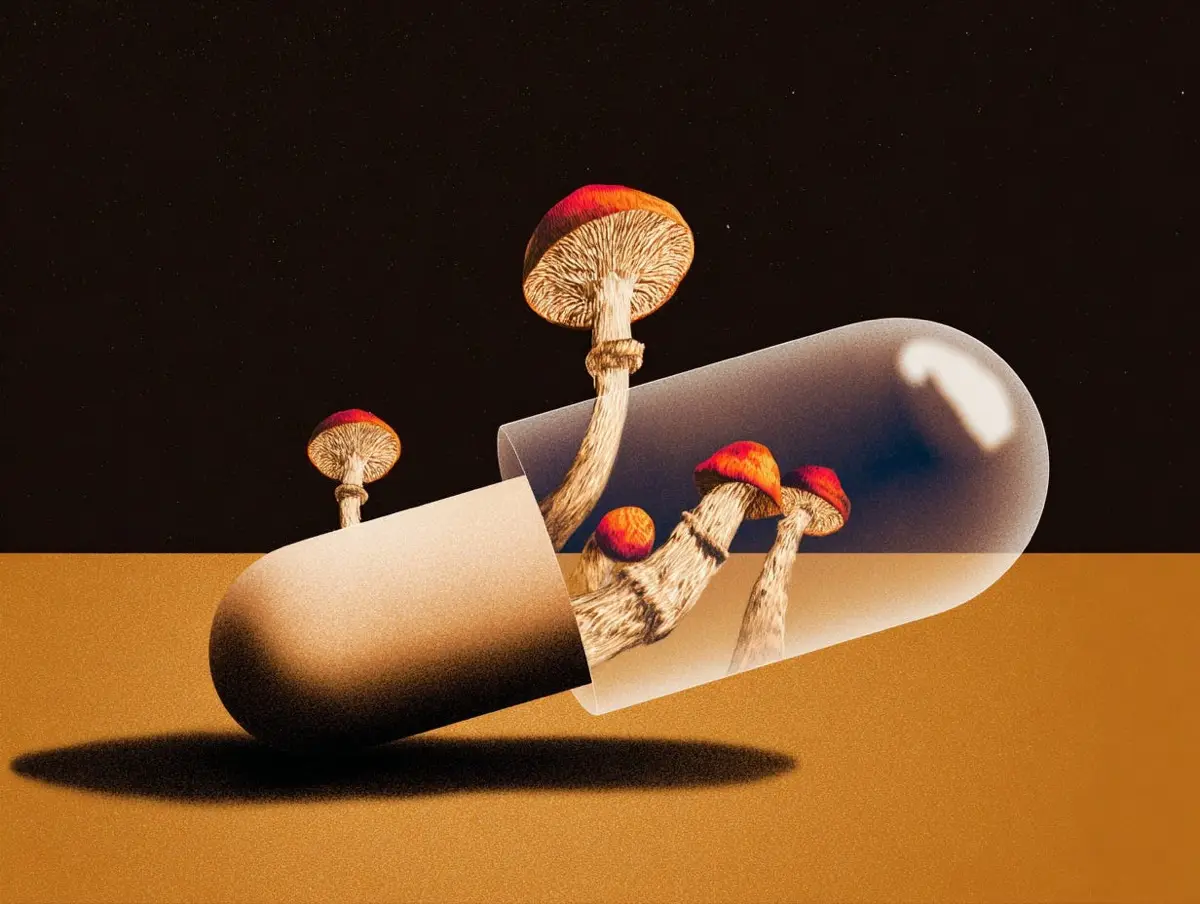

Hospital depression trials increasingly administer synthetic psilocybin capsules while Dutch smart shops sell psilocybin inside wet fungal sclerotia. Both routes deliver the same prodrug eventually converted to psilocin, yet clinical and experiential differences remain large. This article compares synthetic versus natural truffle pathways for curious readers who encounter both in headlines and retreat brochures.
Commercial strain potency variability is covered in the sibling article on psilocybin content by strain. COMPASS Pathways style trials using synthetic psilocybin are summarized in psilocybin for treatment-resistant depression.
What synthetic psilocybin standardizes
Pharmaceutical manufacturing produces crystalline psilocybin with defined milligram doses, excipients, and stability testing. Good manufacturing practice batches support regulatory filings and placebo-controlled designs. Research programs at Johns Hopkins psychedelic research and the Imperial College Psychedelic Research Centre rely on synthetic material to reduce variance between participants.
Capsules eliminate chitin chewing, moisture guesswork, and strain mythology. They enable double-blind studies impossible with unmistakably psychedelic truffle teas. Publication records including COMPASS phase IIb depression results report remission statistics under those controlled conditions.
What natural truffles add beyond alkaloids
Sclerotia are living tissue matrices containing water, fiber, lipids, and minor co-metabolites alongside psilocybin and psilocin. Matrix effects can alter gastric emptying and nausea incidence even when total alkaloid intake is estimated to match a capsule. Reviews in Psilocybe chemistry literature note alkaloid ratios shift with moisture, age, and storage.
Retail truffles are sold by fresh weight tiers, not milligram certificates. The sibling guide on strain content explains why Atlantis, Mexicana, and Tampanensis labels do not equal hospital milligram precision.
Clinical setting versus retreat setting
FDA-informed trial designs described in FDA psychedelic trial guidance specify therapist training hours, cardiac screening, and integration protocols. Tourist truffle sessions may offer compassionate facilitation yet rarely replicate electrocardiogram monitoring or week-long therapist preparation dyads.
Expectancy, music, and room aesthetics differ as well. Synthetic trials in hospitals are not placebo for luxury retreat marketing; they are a different care container with different outcomes distributions.
Onset, duration, and subjective texture
Capsules on empty stomachs produce pharmacokinetic curves documented in volunteer studies. Chewing fresh sclerotia spreads absorption as digestive surfaces break chitin. Anecdotal reports describe earthier body load and slower come-up with truffles, though controlled head-to-head human studies against capsules are scarce.
Redosing dynamics and tolerance match serotonergic pharmacology across forms. Neither synthetic nor natural bypasses rapid tolerance within the same day.
Regulatory and access landscape
Synthetic psilocybin remains investigational or tightly licensed in most countries. Dutch sclerotia occupy a retail niche legal only domestically. Patients reading COMPASS headlines should not assume pharmacy access mirrors Amsterdam smart shop access.
Our COMPASS Pathways overview separates remission statistics in screened depression populations from open tourist weekends with heterogeneous mental health histories.
Why trials rarely use shop truffles
Regulators demand batch consistency, impurity profiles, and stability data difficult to deliver from perishable fungal bags. Whole truffles also prevent successful blinding because taste and nausea reveal active drug. Research economics therefore favor synthesis even when natural fungi inspired the molecule.
Ethnobotanical origin does not obligate clinical programs to use original tissue. Hofmann isolation history matters culturally, not as a mandate for hospital formularies.
Harm reduction for readers comparing options
Do not self-treat depression by extrapolating trial doses to fresh grams. Do not import synthetic research capsules illegally. If participating legally with truffles, screen medications, plan sitters, and log fresh weights conservatively.
Synthetic superiority claims and natural spirituality claims both oversimplify. The useful distinction is controlled milligrams with medical oversight versus variable biomass with retail labeling.
Documentation habits for safer decisions
Keep a photo log of packaging, batch codes, and shop receipts when buying legal truffles for education or retreat use. Notes help clinicians if unexpected physical symptoms appear hours later. They also help you compare vendors across trips without relying on memory alone.
Pair product documentation with session notes on dose weight, preparation method, and elapsed time to onset. Patterns across entries reveal whether variability comes from storage, labeling, or personal metabolism rather than mystery potency swings.
Limits of vendor claims
No retail label can promise therapeutic outcomes. Quality grading, organic badges, and strain names describe commerce, not clinical endpoints. Readers crossing from science news into smart shop aisles should carry that skepticism deliberately.
When uncertain, prefer vendors who answer moisture, substrate, and storage questions without redirecting to hype about ancient wisdom or guaranteed enlightenment.
Excipients and capsule fillers in trials
Synthetic psilocybin capsules include inactive fillers tested for stability. Truffles include fiber that alters nausea profiles. Trial adverse event tables therefore list gastrointestinal symptoms that retail users also report, yet attribution differs between excipient sensitivity and chitin load.
Comparing nausea rates between COMPASS press releases and truffle trip reports is illustrative, not like-for-like science.
Natural product nostalgia versus GMP precision
Some retreat marketers romanticize whole fungi as ancient while trials champion synthesis as progress. Both narratives oversimplify. Whole tissue offers ecological context; synthesis offers dose precision. Informed readers hold both facts without tribal loyalty.
Blinding and expectancy in research
Synthetic capsules enable double-blind designs where participants guess active drug correctly at chance rates. Truffle teas are obviously psychoactive, limiting blinded outcome interpretation. That methodological gap partly explains why hospitals choose synthesis even when inspired by fungi.
Integration and psychotherapy hours
COMPASS-style protocols budget therapist hours before and after dosing. Tourist truffle weekends may offer group integration circles with variable training depth. Psychotherapy time is a confound when comparing remission statistics to retreat testimonials.
Future hybrid trial designs
Some researchers propose comparing synthetic psilocybin with standardized fungal extract in later trial phases. No retail truffle bag currently meets pharmaceutical extract specifications. The distinction may blur in research without making shop products trial grade.
Patient access timelines versus shop access
FDA breakthrough designations for synthetic psilocybin do not schedule Amsterdam shop hours. Patients awaiting regulated medicine and tourists buying truffles occupy different access timelines that headlines conflate. Clarity reduces false expectations on both sides.
Placebo arms and expectancy in trials
Synthetic trials include placebo arms with identical psychotherapy hours. Retreat tourists lack placebo baselines, so subjective breakthrough stories exceed what controlled effect sizes justify. Both synthetic and natural contexts are susceptible to expectancy; only trials measure it.
Cost structures driving synthesis
Pharmaceutical synthesis scales for trial supply chains with documented impurity profiles. Cultivating, grading, and chilling truffles for global trial uniformity would cost more than regulators accept. Economics reinforces the synthetic default in hospitals even when fungi remain legally sold nearby.
Music, eyeshades, and setting parity
Clinical trials standardize music playlists and eyeshade use. Retreat truffles sessions copy those elements from trial culture without copying monitoring or exclusion criteria. Setting parity is partial, so experiential parity claims toward hospital outcomes remain weak.
Reading press releases with trial identifiers
Company press releases cite trial registry numbers readers can verify. Cross-check inclusion criteria before comparing personal truffle weekends to remission percentages. Registry inclusion lists often exclude bipolar disorder, psychosis history, and unstable cardiovascular disease that retreat groups may not screen uniformly.
Conclusion
Synthetic psilocybin delivers precise prodrug doses inside regulated trials. Natural truffles deliver the same core molecule within a variable fungal matrix sold legally in the Netherlands. Read COMPASS depression research and strain potency labels together when interpreting science news against retreat practice.
UNLOCK THE MIND. ELEVATE THE SELF.